English · PDF 188
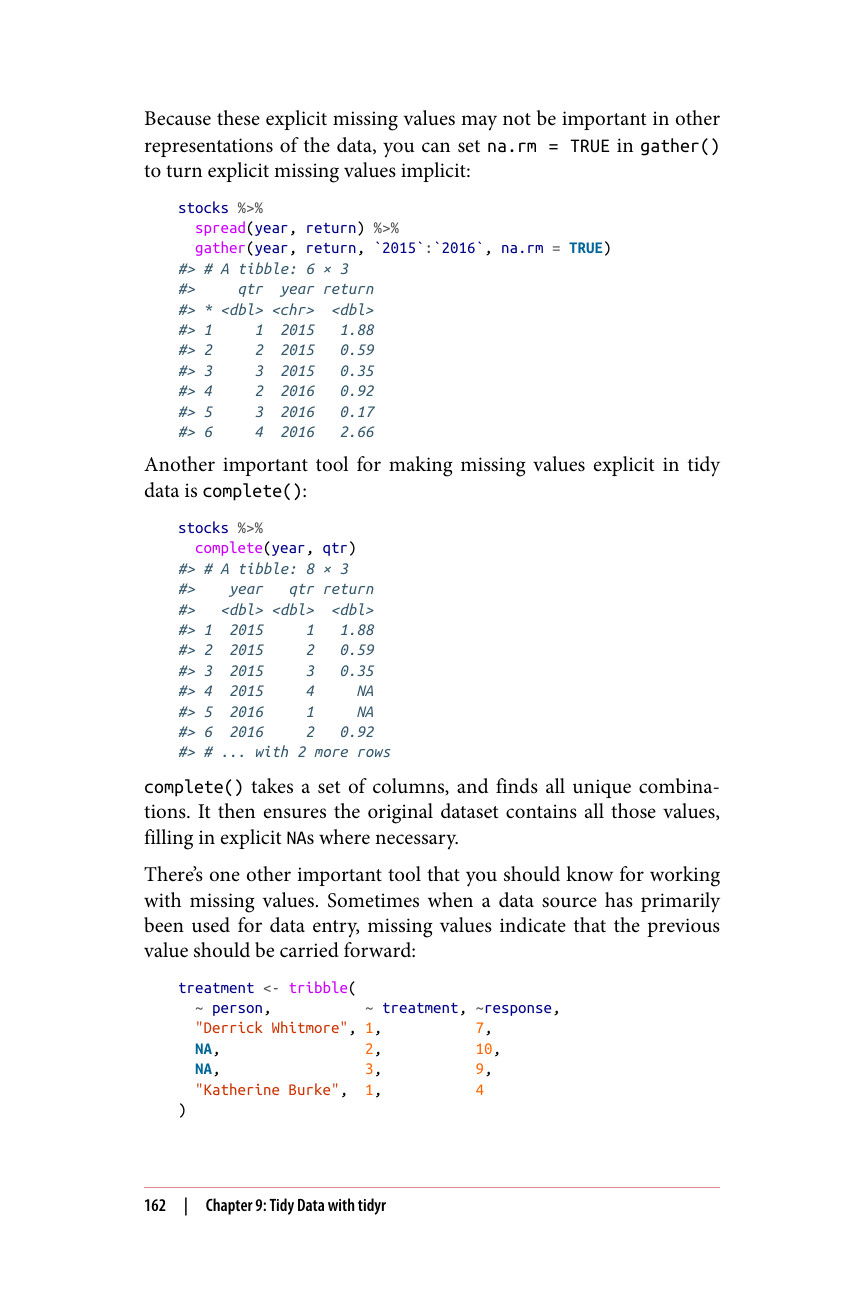
由于这些显式缺失值在数据的其他表示形式中可能并不重要,你可以在 gather() 中设置 na.rm = TRUE,将显式缺失值变为隐式:
stocks %>% spread(year, return) %>% gather(year, return, 2015:2016, na.rm = TRUE) #> # A tibble: 6 × 3 #> qtr year return #> *
在整洁数据中将缺失值显式化的另一个重要工具是 complete():
stocks %>% complete(year, qtr) #> # A tibble: 8 × 3 #> year qtr return #>
complete() 接受一组列,并找出所有唯一的组合。然后它会确保原始数据集包含所有这些值,并在必要时填入显式的 NA。
还有一个处理缺失值的重要工具你应该了解。有时当数据源主要用于数据录入时,缺失值表示应将前一个值向前填充:
treatment <- tribble( ~ person, ~ treatment, ~response, "Derrick Whitmore", 1, 7, NA, 2, 10, NA, 3, 9, "Katherine Burke", 1, 4 )