English · PDF 186
#> 5 中国 19_99 212258/1272915272 #> 6 中国 20_00 213766/1280428583
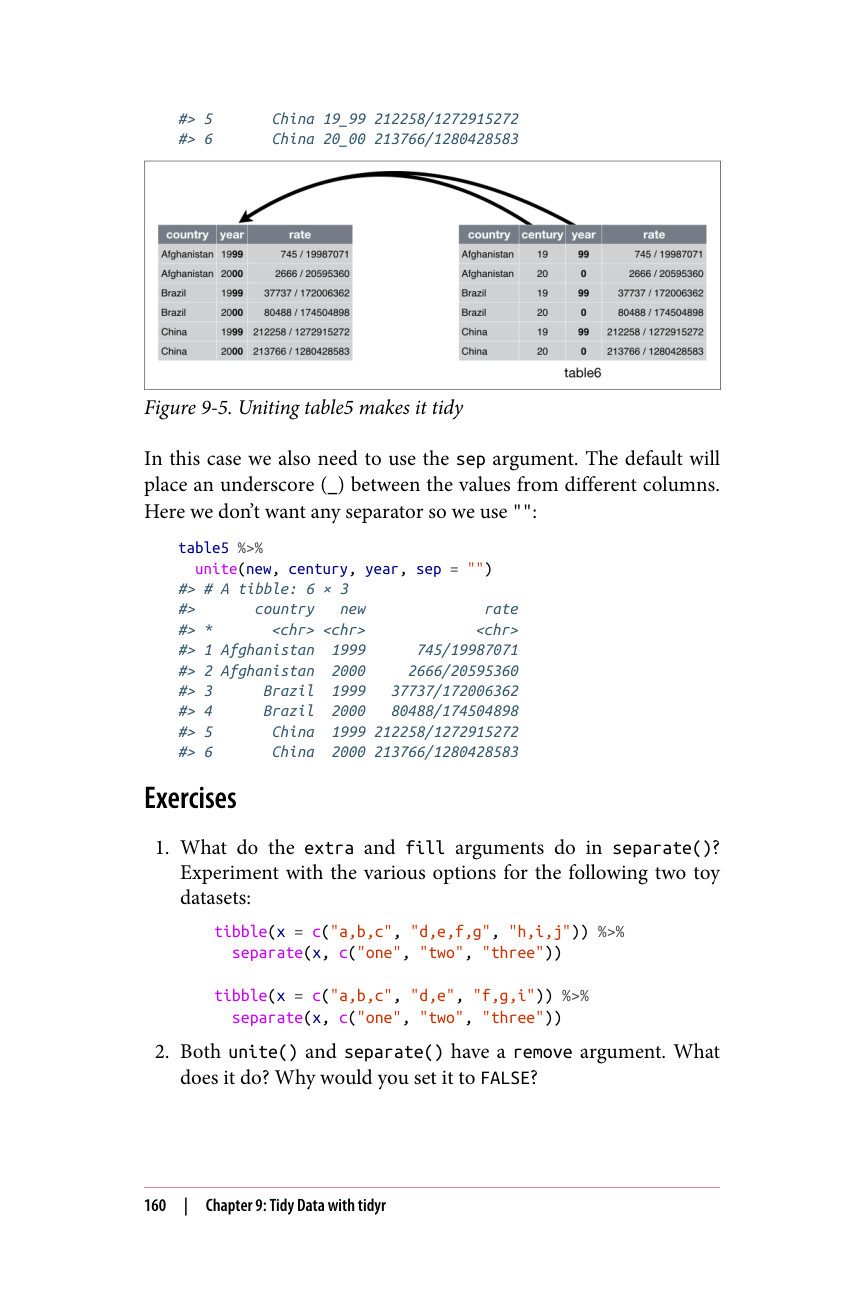
| 国家 | 年份 | 比率 | 国家 | 世纪 | 年份 | 比率 |
|---|---|---|---|---|---|---|
| 阿富汗 | 1999 | 745 / 19980771 | 阿富汗 | 19 | 99 | 745 / 19980771 |
| 阿富汗 | 2000 | 2666 / 20595360 | 阿富汗 | 20 | 0 | 2666 / 20595360 |
| 巴西 | 1999 | 37737 / 172006362 | 巴西 | 19 | 99 | 37737 / 172006362 |
| 巴西 | 2000 | 80488 / 174504898 | 巴西 | 20 | 0 | 80488 / 174504898 |
| 中国 | 1999 | 212258 / 1272915272 | 中国 | 19 | 99 | 212258 / 1272915272 |
| 中国 | 2000 | 213766 / 1280428583 | 中国 | 20 | 0 | 213766 / 1280428583 |
图 9-5. 合并 table5 使其整洁
在这个例子中我们还需要使用 sep 参数。默认值会在来自不同列的值之间放置一个下划线(_)。这里我们不想要任何分隔符,所以我们使用 "":
table5 %>% unite(new, century, year, sep = "") #> # A tibble: 6 × 3 #> country new rate #> *
tibble(x = c("a,b,c", "d,e,f,g", "h,i,j")) %>% separate(x, c("one", "two", "three"))
tibble(x = c("a,b,c", "d,e", "f,g,i")) %>% separate(x, c("one", "two", "three"))